
What the heck are systems, anyway?
Welcome back, corporate leaders, aspiring escapees, and entrepreneurs!
You were trained to work a certain way.
In corporate, you ran on someone else's systems, someone else's priorities. You had tools, titles, timelines, and a whole structure designed for you.
But now?
You have a chance to pause.
To ask: What pace actually energizes me? What do I want my clients to experience? What does sustainable success look like for me?
You get to design a business around:
The rhythm and structure that work for you
A way of working that reflects your real priorities
An experience that feels good, for you and your clients
That's what true foundation is.
Not just tools, or tactics. But a rhythm that's actually yours.
It's also my word for 2026, and what this month's Stitch is all about.
Let's build you a brand your clients rave about!
Cheering you on,
-Lu
🧵 The Question That Started Everything
This came up in a client call last week.
She came to me ready to work on her systems. Her first question? "Which CRM should I use?"
I had to stop her.
"Before we talk platforms," I said, "let's talk about how you actually want to work."
She paused. "What do you mean?"
"What worked in your corporate role? What drained you? How do you want your clients to feel when they work with you? What rhythm gives you energy?"
That moment, that pause... is everything.
Because so many corporate escapees confuse "systems" with "tools."
But platforms come after. What you need first is foundation.
🎯 What Systems Actually Are (And Why Client Journey Comes First)
That conversation happens all the time.
Corporate escapees want to work on their systems, but they skip straight to: Which tool? Which CRM? Which platform?
What they're actually asking:
What's my client journey?
Systems aren't tools. Systems are:
How leads move through your business
What happens after someone books a call
How clients experience working with you
When and how you follow up
What your day to-day rhythm looks like
Most people pick tools and force their process to fit.
My approach? Design your client journey first. Then choose tools that support how YOU want to work.
This matters because:
You avoid expensive mistakes—when you know your client journey, you pick tools that actually fit, not just what's popular.
Your client experience is intentional—you're building a workflow that supports how you want clients to FEEL, not conforming to someone else's template.
You prevent tool bloat—when you know what you need, you're not buying 10 subscriptions hoping one magically solves everything.
It honors your corporate experience—you know what worked and what didn't. We extract that wisdom first, then build around it.
Now, sometimes clients come to me with an industry standard tool already in place. Sometimes they're brand new and we're starting from scratch. Either way, the process is the same, we design the client journey first, then adapt or choose tools to support it.
I'm seeing this work in real time.
A client I'm currently working with told me he was so disorganized before we started. Nothing felt clear. Everything felt reactive.
Now? He's already saving so much time with prospects and clients. Not because we found some magic tool, but because we designed his systems and client experience around how he actually wants to work.
Because you can't build the right infrastructure if you don't know what you're building it for.
💬 How Thread Studio Works
So what does this actually look like when you work with Thread Studio?
Thread Studio helps corporate escapees and early stage entrepreneurs go from scattered expertise to sustainable business.
Corporate escapees don't lack ideas. You have too many. Every direction feels equally important. Every idea feels urgent.
So you freeze. Or you hustle harder. Or you keep adding more.
What you actually need is a clear path forward.
We work in three phases:
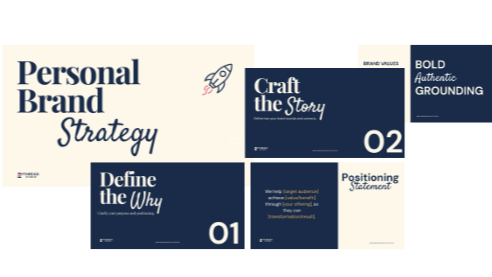
Phase 1: Brand Strategy Foundation Get clear on who you are, what you stand for, and how to talk about what you do.
Phase 2: Systems & Client Experience Turn that clarity into a real, functioning business with client journeys, onboarding, and operations that work.
Phase 3: Execution Keep it running and scaling with ongoing strategic support. This is where monthly Fractional Chief of Staff work comes in. Brand strategy, marketing oversight, strategic communications, and operational alignment as your business evolves.
Foundation isn't just about your story. It's about knowing what to build first, so everything else has something solid to stand on.
That's why your brand story is the first domino.
🤖✨ The Pitch Stitch: Coming Soon
Finally answer "What do you do?" with clarity and confidence.
The Pitch Stitch is a free AI powered tool that turns your scattered ideas into a clear, confident elevator pitch people actually understand.
You're great at what you do. But when it comes time to explain it? You freeze, ramble, or default to generic corporate speak.
Your clarity is coming.
The Pitch Stitch is one small piece of the larger Personal Brand Clarity work I do at Thread Studio. Think of it as your first step toward answering "What do you do?" without freezing.
Join the waitlist to be the first to try The Pitch Stitch!
🗓️ Upcoming Events
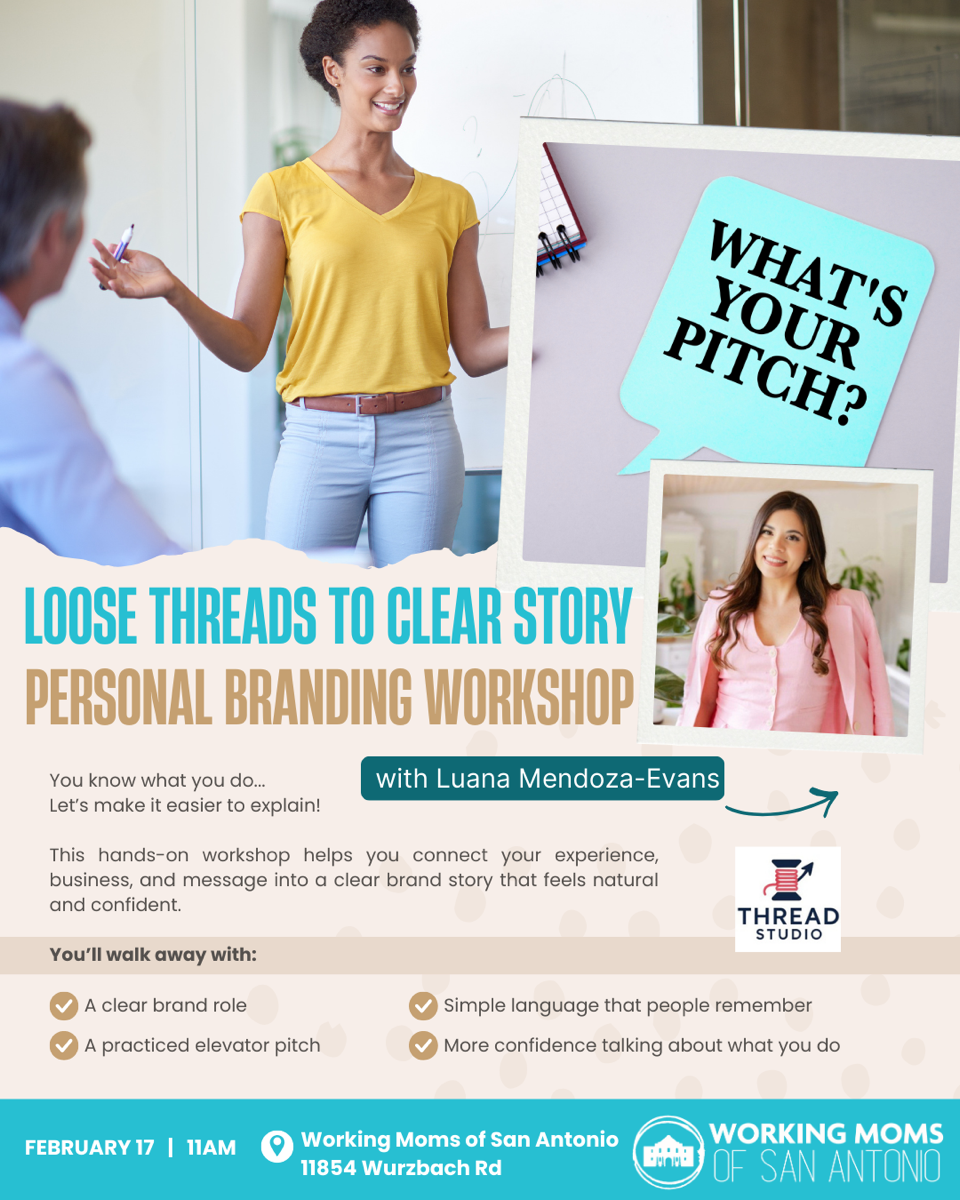
📅 Tuesday, February 17 | 11:00AM - 12:30 PMCST
📍Working Moms of San Antonio
You know what you do. Explaining it clearly is another story.
When the thread between your experience, your business, and your message isn't clear, conversations feel harder than they should. Introductions get long. Confidence dips.
This hands on workshop is about pulling those loose threads together. Together, we'll build the foundation of your personal and business brand so you can communicate what you do in a way that feels natural, clear, and true to you.
You'll leave with clearer language, a practiced elevator pitch, and more confidence talking about what you do in real conversations.
If you're in San Antonio and want to do this work face to face, in real time, with other ambitious women, join us!
🪡 The Stitch to Remember
You didn't leave corporate to spend your days drowning in disorganization and reacting to whatever comes next.
Foundation before momentum.
And foundation means knowing how you want to work. Your rhythm, your client journey, your systems, before you pick your next tool.
That's what makes it sustainable.
-Lu
